Fire Extinguisher for Swimming Pools: The Safe and Code‑Compliant Choice for Pool Chemical Areas
When people search for a fire extinguisher for swimming pools, they are usually trying to answer one critical question: What fire extinguisher is actually safe around pool chemicals?
The answer matters more than most people realize. Swimming pools rely heavily on chlorine‑based and other oxidizing chemicals, and using the wrong fire extinguisher in these areas can intensify a fire, trigger a violent chemical reaction, or create explosive compounds.
That’s why fire codes provide very specific guidance on fire extinguisher selection for swimming pool facilities.
Why Pool Chemical Rooms Are Different
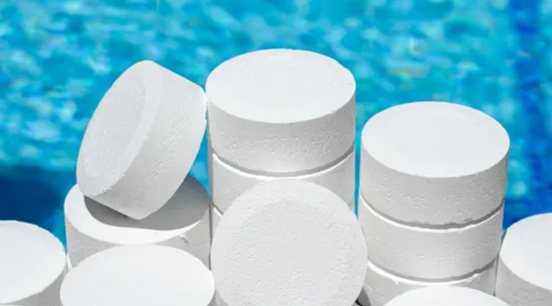
Pool equipment rooms, storage areas, and supply rooms commonly contain oxidizers, including chlorine and bromine compounds. Oxidizers do not burn themselves, but they feed fires, accelerate combustion, and react dangerously with incompatible extinguishing agents.
According to NFPA 400 (Hazardous Materials Code), certain portable fire extinguishers are prohibited anywhere oxidizers are stored or used. This is especially relevant for swimming pools, where chlorine is one of the most common oxidizers in use.
Choosing the correct fire extinguisher for a swimming pool is not just best practice — it is a life‑safety issue.
Fire Extinguishers That Should NOT Be Used Near Pool Chemicals
A common and dangerous mistake is installing standard multipurpose extinguishers in pool chemical areas. Fire codes explicitly prohibit several common extinguisher types in these environments.
❌ Dry Chemical (ABC) Fire Extinguishers
- Contain ammonium compounds
- Can react with chlorine‑based oxidizers
- May produce nitrogen trichloride (NCl₃), an explosive compound
- Specifically prohibited near oxidizers by NFPA 400 and reinforced by NFPA 10
❌ Carbon Dioxide (CO₂) Fire Extinguishers
- Prohibited in oxidizer storage areas
- Can worsen chemical reactions rather than control them
❌ Halon and Halocarbon Clean Agent Extinguishers
- Not permitted around oxidizers unless specifically tested and approved
- Can chemically react with oxidizing agents and increase hazard severity
Installing any of these in a swimming pool chemical room can turn a small emergency into a major incident.
The Correct Fire Extinguisher for Swimming Pools
So what is the correct option?
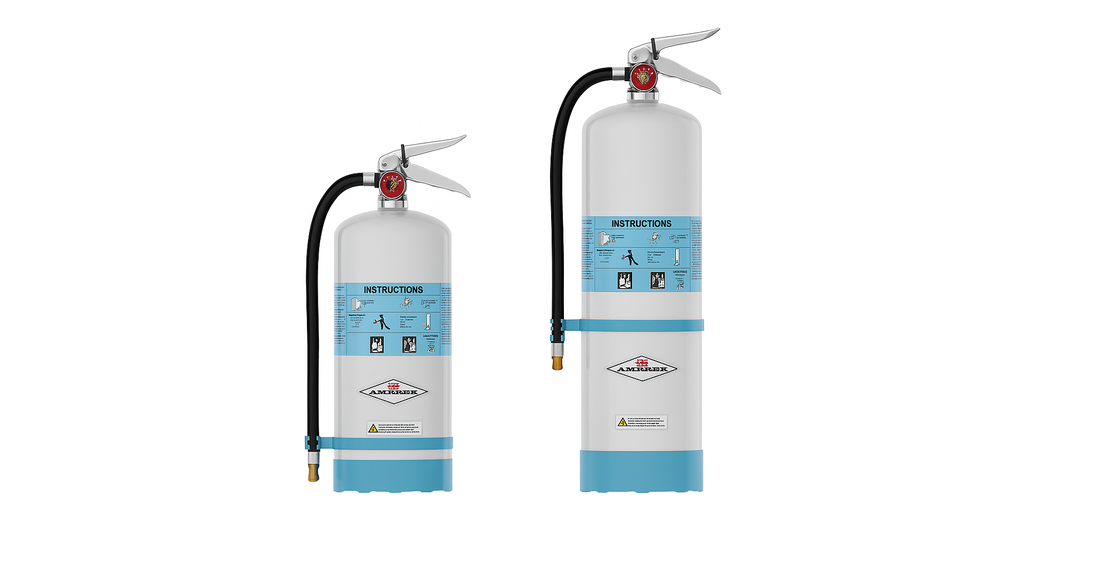
✅ Water Fire Extinguishers
NFPA 10 clearly states that only water fire extinguishers are permitted in areas where pool chemicals containing chlorine or bromine are stored.
Water extinguishers are used to:
- Suppress incipient fires in nearby combustibles
- Prevent fire spread toward oxidizers
- Avoid dangerous chemical reactions
It’s important to understand the intent behind this requirement.
Portable fire extinguishers in pool chemical areas are not meant to extinguish fires involving the chemicals themselves. Fires involving oxidizers are typically beyond the capability of portable extinguishers. Instead, the goal is early intervention on surrounding materials before the chemicals become involved.
Why This Matters for Pool Owners and Facility Managers
If you operate or manage:
- Public swimming pools
- Hotels or resorts
- Water parks
- Community or HOA pools
- Pool supply warehouses or distribution centers
…you are responsible for ensuring the fire extinguishers installed in your facility do not increase risk during an emergency.
Incorrect extinguisher placement in pool chemical rooms can result in:
- Failed fire inspections
- Code violations
- Increased liability exposure
- Severe injury risk to employees and first responders
Fire inspectors and Authorities Having Jurisdiction (AHJs) frequently cite facilities for having ABC extinguishers installed near pool chemicals, making this one of the most common — and preventable — violations.
To learn more, read our tech tip no. 43.
Watch our How to Use A Water Mist Fire Extinguisher Training Video
Contact an authorized Amerex fire equipment distributor for pool fire extinguisher service.